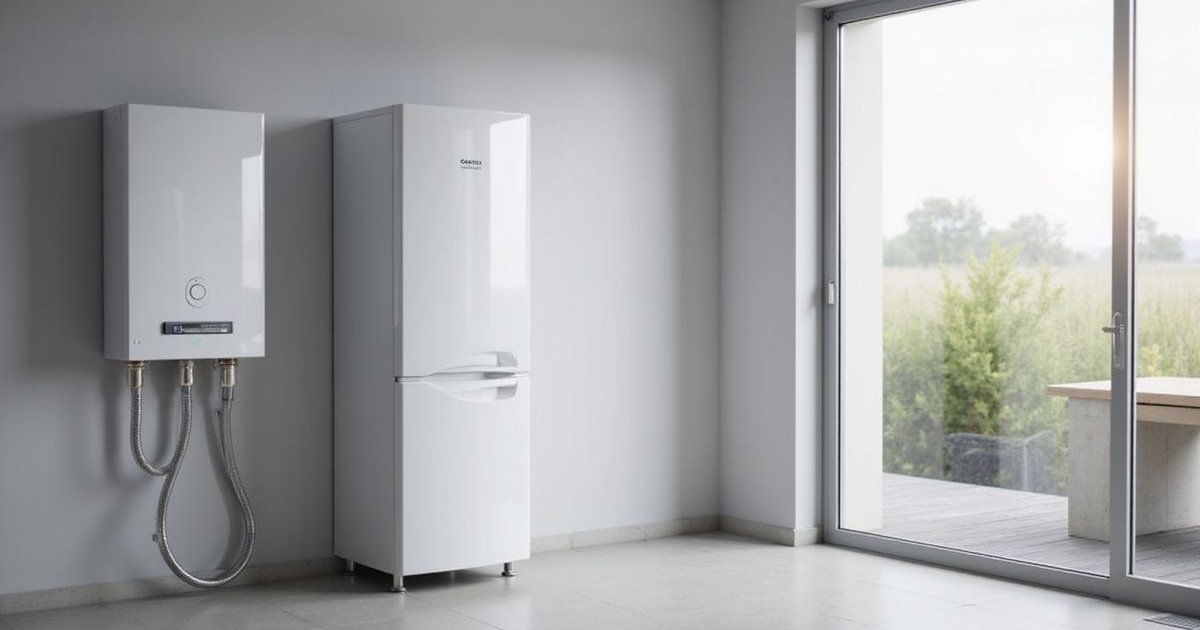
Solar Hot Water vs Solar Panels with Heat Pump: Which Is More Efficient?
Compare dedicated solar hot water systems against using solar PV to power a heat pump. Costs, efficiency, and space requirements analysed.
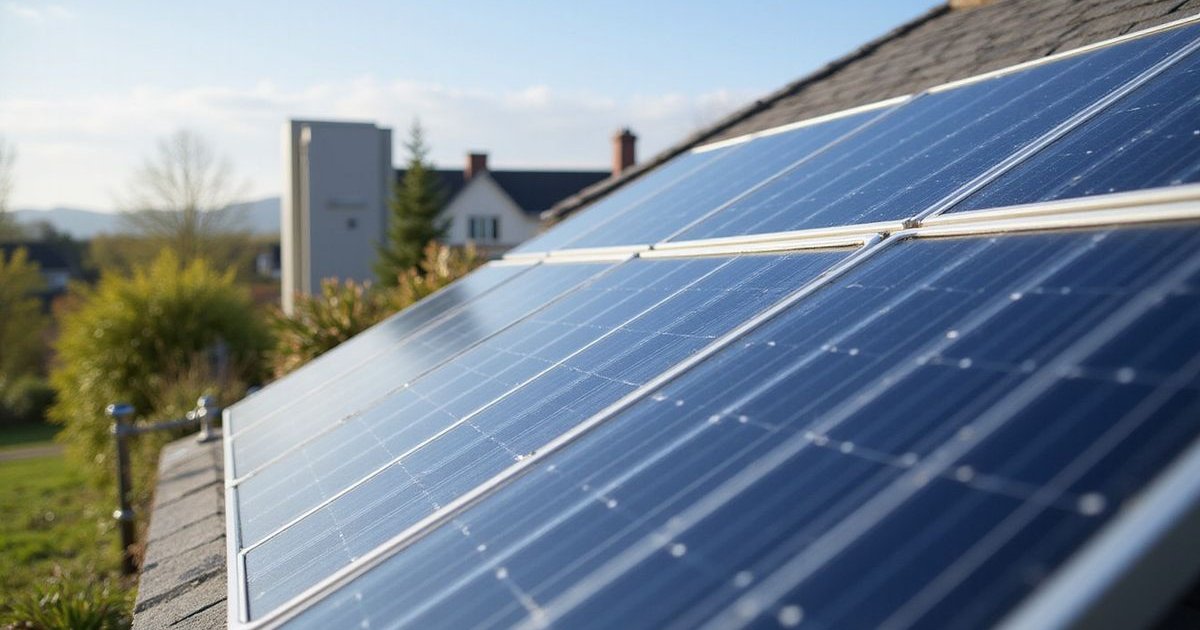
Here is the comprehensive guide comparing solar hot water and heat pumps, tailored for Perth homeowners.
When you look at the renewable hot water options available today, it’s easy to see why Perth homeowners get stuck comparing these two technologies. We have installed thousands of units across Western Australia, and the conversation almost always boils down to “classic solar” versus the “modern heat pump.”
Both options slash your energy bills compared to old electric or gas storage units.
However, the way they deliver those savings is completely different. We find that for most modern households, one technology is starting to pull ahead due to flexibility and grid integration.
Let’s look at the data, the real-world performance, and the practical reasons one might suit your home better than the other.
How Each System Works
Solar Hot Water (Solar Thermal)
You can think of this as the “traditional” approach that has dominated Australian roofs for decades.
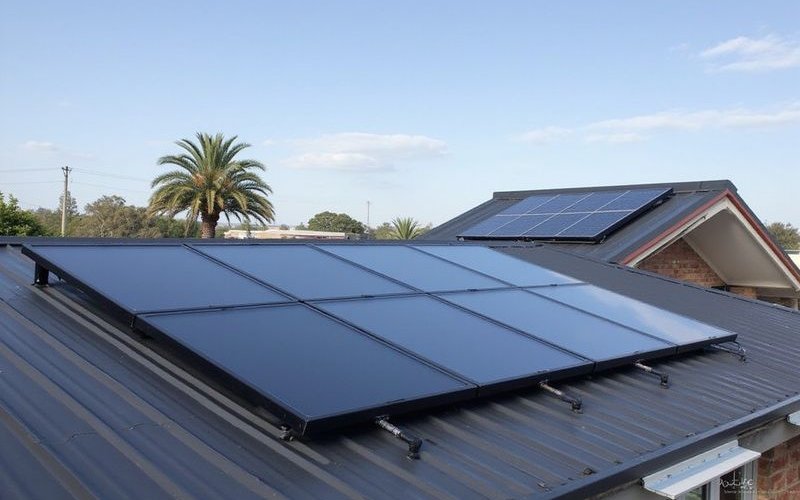
- Dark-coloured collectors sit on your roof and absorb solar radiation.
- Heat transfers directly to the water (or a special fluid) inside copper pipes.
- Hot water flows into a storage tank, which is often mounted on the roof above the panels.
- A booster (gas or electric) kicks in when the sun isn’t strong enough.
The sun’s heat warms your water directly. No electricity generation is required for the heating process itself.
Solar PV + Heat Pump
This approach is technically an “air-source” system, but it acts like a battery for heat.
- Solar PV panels generate electricity from sunlight.
- This electricity powers a heat pump, which is a unit that looks like an air conditioner compressor.
- The heat pump extracts warmth from the ambient air outside your home.
- Heat is transferred to the water in a storage tank via a heat exchanger.
The sun generates electricity, which then runs a highly efficient appliance. We often describe a heat pump to customers as a “reverse fridge” because it pulls heat out of the air and pumps it into your water tank.
Efficiency Comparison
Solar Hot Water Efficiency
Solar thermal collectors are incredibly efficient at the point of capture.
- Collector efficiency: 60-80% of solar energy is converted directly to heat.
- Typical solar contribution: 60-80% of your annual hot water needs are free.
- Boosting: This is the weak point. You must pay for expensive grid electricity or gas on cloudy days and during winter.
Efficiency drops significantly if your roof isn’t perfect. We see performance suffer when collectors are shaded by trees or not facing true north.
Solar PV + Heat Pump Efficiency
This system uses a multiplier effect that changes the math completely.
- Solar PV efficiency: Panels only convert about 18-22% of sunlight into electricity.
- Heat Pump efficiency: This is measured by the Coefficient of Performance (COP). A quality unit like the Reclaim Energy CO2 heat pump can achieve a COP of roughly 5.0.
- The Math: This means for every 1kW of electricity you put in, you get 5kW of heat out.
Even though solar panels are less efficient at capturing energy than thermal collectors, the heat pump multiplies that energy. We have seen that 1kW of solar electricity running a heat pump produces a comparable amount of hot water to a thermal system, but with much more control.
Space Requirements
Solar Hot Water
- Collector size: You typically need 4-6m² of prime roof space.
- Roof requirements: The roof must handle significant weight, especially for “thermosiphon” systems where the heavy tank is on top.
- Tank location: Roof-mounted tanks are visible from the street, which some homeowners dislike.
Solar PV + Heat Pump
- PV panel size: You only need about 3-4 standard panels to cover a heat pump’s annual usage.
- Heat pump footprint: The unit sits on the ground like an A/C compressor (approx. 0.8m x 0.3m).
- Tank: This stands on the ground, removing hundreds of kilograms from your roof structure.
If you have a complex roofline, the heat pump wins easily. We prefer this setup for double-storey homes because it eliminates the need for heavy lifting equipment or reinforced roof frames.
Cost Comparison
Upfront Costs
Prices in Perth have shifted in 2026 due to changing rebates and manufacturing costs.
Solar hot water (installed):
- Flat plate system: $3,500 - $6,000.
- Evacuated tube system: $4,500 - $7,500.
- Rebates: You still get STCs (Small-scale Technology Certificates), but the value is declining as we approach 2030.
Solar PV + heat pump:
- Heat pump unit: $3,000 - $5,000 (fully installed after rebates).
- Additional Solar PV: $2,000 - $3,500 (if you need to add dedicated panels).
If you already have a solar power system, adding a heat pump is almost always cheaper than installing a new solar thermal system.
Running Costs
This is where the local Perth energy market makes a huge difference.
Solar hot water:
- Boosting costs: You cannot control when the booster runs as easily.
- Annual cost: Typically $170 - $480 per year depending on gas vs electric boost.
Solar PV + heat pump:
- Self-consumption: If you run the heat pump on a timer between 9 am and 3 pm, it runs for free off your solar.
- Synergy Midday Saver: Even without solar, Perth’s “Midday Saver” tariff offers electricity at roughly 8 cents per kWh during the day.
- Annual cost: Can be as low as $50 - $100 per year if timed correctly.
We always advise customers to set their heat pump timer to run during that “solar sponge” window in the middle of the day.
Advantages of Each Approach
Solar Hot Water Advantages
- Direct heating: It is simple, proven technology that has worked for 50 years.
- Passive operation: Thermosiphon systems have no moving parts in the heating cycle, meaning fewer things can break.
- Longevity: A high-quality copper or stainless steel tank on the roof can last 15+ years with minimal maintenance.
Solar PV + Heat Pump Advantages
- Programmable: You can force the unit to heat only when electricity is cheapest.
- Smart integration: Modern units like the iStore or Reclaim can “talk” to your solar inverter to maximize efficiency.
- Consistent temperature: It works brilliantly even when the ambient temperature drops, especially CO2-based systems.
- No overheating: Solar thermal systems can boil in summer, dumping water on your roof. Heat pumps just turn off when full.
- Scalable: You can easily add more solar panels later to power an EV or battery, which benefits the hot water system too.
Which Is Better for Perth?
Perth has a unique climate and energy grid, so the “best” answer depends on your specific property.
Choose Solar Hot Water If:
- You have ample north-facing roof space and want a “set and forget” solution.
- You rely on gas and want to keep a gas booster for unlimited back-up capacity.
- You have a shaded block where solar PV panels wouldn’t generate enough consistent electricity.
Choose Solar PV + Heat Pump If:
- You already have solar panels (or plan to get them).
- You want to use the Synergy Midday Saver to access 8-cent electricity.
- You have limited roof space and need to prioritize panels for general home power.
- You dislike the look of a tank on your roof.
- You are concerned about weight on an older roof structure.
The Emerging Trend
The market in Western Australia has swung heavily toward heat pumps in the last three years.
Several factors drive this:
- Falling PV costs: It is now cheaper to generate electricity and run a compressor than to capture heat directly.
- Synergy Tariffs: The gap between peak (55c) and off-peak (8c) rates makes smart electric appliances very attractive.
- Whole-house solar: Most Perth homes are essentially small power stations now; an electric water heater acts as a “thermal battery” to soak up that excess power.
Hybrid Considerations
Some homeowners get creative to maximize their savings.
- Upgrade logic: When an old solar thermal system dies, we often replace it with a heat pump and use the old roof space for extra PV panels.
- Timer strategy: Using a simple $20 timer on a standard electric tank is okay, but a heat pump uses 75% less energy to do the same job.
There is no single right answer, but the flexibility of the heat pump + PV combination is winning over most of our customers.
Making Your Decision
Consider these questions before you sign a quote:
- Do you have or want solar PV? If yes, a heat pump is likely your best partner.
- What is your roof situation? If you have a steep or brittle roof, avoid the heavy solar thermal tanks.
- Are you sensitive to noise? Heat pumps make a low hum (like a fridge). Solar thermal is silent.
- What is your budget? Check the current STC rebate value, as it changes annually.
Our Recommendation Process
When you contact us about renewable hot water options, we look at the whole picture.
We assess:
- Your roof layout and orientation.
- Existing or planned solar PV capacity.
- Hot water usage patterns (morning vs evening showers).
- Available installation locations (and noise impacts on neighbors).
Then we recommend the approach that maximizes value for your specific situation.
Both solar hot water and solar PV + heat pump combinations offer genuine environmental and cost benefits. The “best” choice depends on your individual circumstances, and we are here to help you work that out.
Hot Water System Perth Team
Local hot water experts serving Perth since 2021. Licensed plumbers specialising in heat pump and solar hot water systems.