Hot Water Not Working? Troubleshooting Guide for Perth Homeowners
Step-by-step troubleshooting for common hot water problems. What to check before calling a plumber and when professional help is needed.

Discovering you have no hot water is frustrating.
It always seems to happen right before work or after a long day.
We founded Hot Water System Perth in 2021 because we saw too many homeowners replacing systems that only needed a simple hot water repair.
From what we’ve seen, nearly 30% of “broken” units just need a reset or a minor adjustment.
This guide will walk you through the exact checks our technicians use to diagnose the problem before you spend a cent.
First: Identify Your System Type
Troubleshooting is useless if you are looking at the wrong instructions.
Take a quick look at your unit to confirm what you are dealing with.
- Electric Storage: Look for a large tank, usually white or grey, with electrical cables entering the bottom or side. It sits on a concrete base or in the roof.
- Gas Storage: This looks like a tank but has a gas pipe (usually copper) and a flue (chimney) on top. You will hear a “whoosh” sound when it heats.
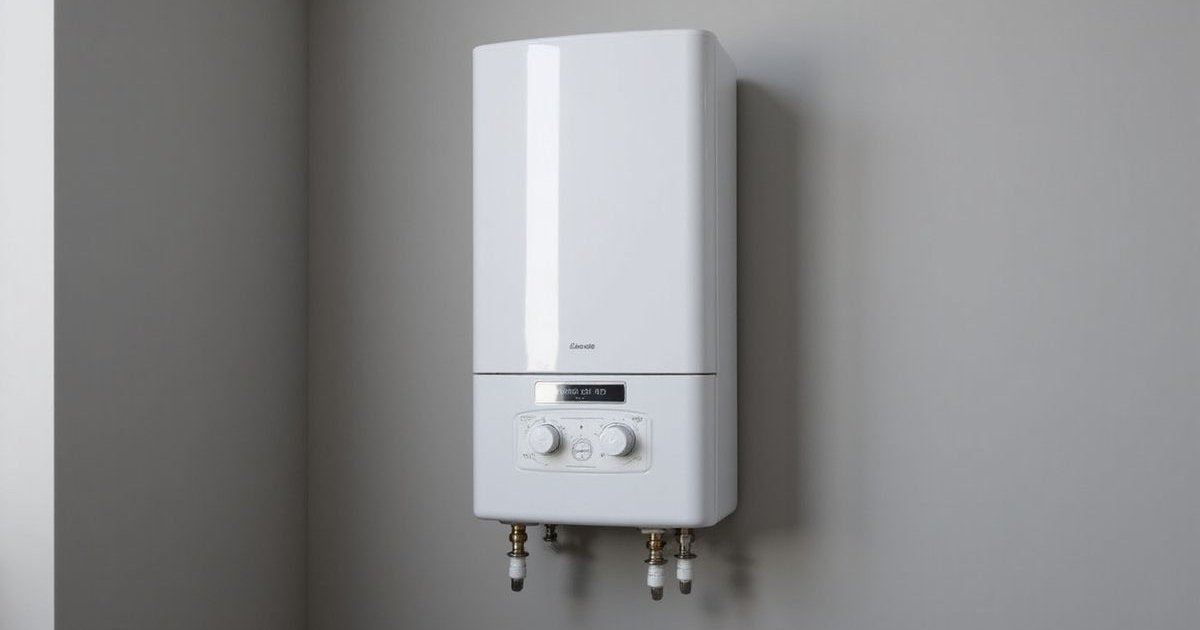
- Gas Instantaneous: These are small, wall-mounted boxes about the size of a carry-on suitcase. There is no tank.
- Heat Pump: It looks like an electric tank but has a compressor unit on top or beside it, similar to an air conditioner motor.
- Solar: You will see panels or tubes on the roof. The tank might be on the roof (thermosiphon) or on the ground (split system).
Electric Storage System Troubleshooting
These systems are the workhorses of Perth homes, but they are prone to simple electrical trips.
Step 1: Check the Power Supply
This is the most common issue we encounter.
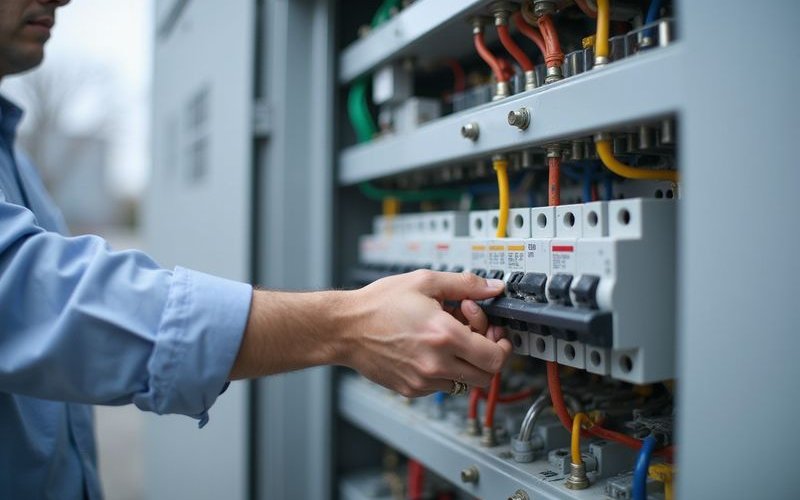
Go to your switchboard and look for the circuit breaker marked “Hot Water” or “HWS.”
- Check position: Is the switch in the ‘ON’ position?
- Look for the trip: If it is stuck in the middle or down in the ‘OFF’ position, it has tripped.
- The Reset: Flip it firmly to ‘OFF’, wait two seconds, and then flip it back to ‘ON’.
If it trips again immediately with a loud pop or buzz, stop.
This indicates a “dead short,” usually caused by a burnt-out element or melted wiring.
Step 2: Verify Off-Peak Settings (Controlled Load)
Many homes in WA are on a controlled load tariff to save money.
Synergy or your provider may only supply power to the tank during specific windows.
- Traditional Off-Peak: Power is often only available overnight (e.g., 10 PM to 7 AM).
- Solar Sponge: Newer tariffs might heat water during the day (9 AM to 3 PM) to soak up solar energy.
If you use all your hot water in the morning, the tank might not have permission to reheat until that night.
Wait for the next cycle to see if the water heats up.
Step 3: The “Hidden” Thermostat Reset Button
Most people do not know their tank has an emergency kill switch.
Electric water heaters have a high-temperature energy cut-out (ECO) to prevent the water from boiling.
- Safety First: Turn off the power at the switchboard. Do not skip this.
- Access: Unscrew the small cover panel on the side of the tank (usually near the bottom).
- Inspect: Look for a small red or black button on the thermostat block.
- Action: If it has popped out, press it back in until you feel a click.
Assemble the cover, turn the power back on, and wait two hours.
If this button keeps popping out, your thermostat is likely failing and cooking the water.
When to Call:
- The breaker trips immediately after resetting.
- You see scorch marks around the access panel.
- There is water leaking from the electrical cover.
Gas Storage System Troubleshooting
Gas systems are reliable, but the pilot light is their Achilles’ heel.
Step 1: Check the Pilot Light
We get dozens of calls every winter just for blown-out pilot lights.
Look through the small inspection window at the bottom of the unit.
- Blue Flame: The system is working. Your issue might be the thermostat setting or usage.
- No Flame: The pilot is out.
How to Relight It (The Right Way): Most units like the Rheem Stellar or Vulcan Freeloader follow this process:
- Turn the control knob to the “Star” or “Pilot” position.
- Depress the knob fully and hold it down.
- Click the piezoelectric igniter button repeatedly (listen for the click-click-click) until you see a flame.
- The Critical Step: Keep holding the knob down for at least 20 to 30 seconds after the flame appears.
- Release slowly and turn the knob to a number setting (usually 6 or 7).
If the flame dies as soon as you let go of the knob, your thermocouple is likely dead.
Step 2: Gas Supply Verification
It sounds obvious, but verify you actually have gas.
Go to your gas meter box (usually a beige box on the side of the house).
- Ensure the handle on the meter is parallel to the pipe (open).
- Check another gas appliance, like a stovetop, to see if you have flow.
Step 3: Flue and Ventilation Safety
Gas units need to breathe.
We often find that homeowners have stacked boxes or garden waste against the unit.
- Clear all debris from around the base.
- Check the flue (chimney) on top for obstructions like leaves or bird nests.
When to Call:
- You smell gas (Turn off the gas at the meter immediately and call ATCO or a pro).
- The pilot lights but goes out after a few hours.
- The flame is yellow and lazy (it should be sharp and blue).
Gas Instantaneous Troubleshooting
These tankless units are smart, meaning they will tell you exactly what is wrong.
Step 1: Decode the Error
Check the digital controller in your bathroom or kitchen, or look at the LED display on the front of the unit itself.
A number flashing on the screen is a diagnostic code.
| Error Code (Common) | Meaning | Action |
|---|---|---|
| 11 | No Ignition | Check gas is on. Check cylinder (if LPG). |
| 12 | Flame Failure | Flame lit but went out. Check gas pressure/debris. |
| 79 | Fan Motor Current | Air intake is blocked or fan is broken. |
| 90 | Combustion Abnormality | Blocked flue or improper gas mix. Call a pro. |
| 10 | Air Supply/Exhaust Blockage | Check for obstructions in the flue. |
Step 2: The Flow Rate Test
Instantaneous units need a minimum water flow (usually 2-3 litres per minute) to fire up.
Water saving devices can sometimes cause problems here.
- Test: Turn on the hot tap fully in the bath (high flow). If the water gets hot there but not at your low-flow kitchen sink, the heater is fine.
- Fix: Your sink aerator might be blocked with grit. Unscrew the tip of the tap and clean the mesh.
Step 3: Power Check
People often forget that gas continuous flow units need electricity to run their computer and fan.
Check the external weatherproof power point (GPO) near the unit.
- Plug in a phone charger or hairdryer to test if the socket works.
- If the socket is dead, check your house’s safety switch (RCD).
When to Call:
- Error codes persist after turning the power off and on.
- Water temperature fluctuates wildly (goes cold, then hot).
- The unit makes a loud booming noise when lighting.
Heat Pump Troubleshooting
Heat pumps are essentially reverse fridges, and they behave differently than standard electric tanks.
Step 1: Airflow is Everything
The fan unit needs to suck in huge amounts of air to extract heat.
- Clear the Zone: Ensure there is at least 500mm of clearance around the fan unit.
- Check the Evaporator: Look at the fins (the metal grilles). Are they clogged with dust or dog hair?
- Clean: Gently brush off any debris.
Step 2: The Winter Defrost Cycle
In Perth winters, morning temperatures often drop below 5°C.
You might see the unit stopped with frost on the coils, or steam rising from it.
- Don’t Panic: This is likely the “defrost cycle.” The unit reverses to melt the ice.
- Wait: Give it 30 minutes to finish the cycle and resume heating.
Step 3: Controller Modes
Modern heat pumps have complex digital controllers.
Check the display panel.
- Ensure it is not in “Timer” mode if you need water now.
- Check for “Vacation” or “Holiday” mode, which keeps water at a bare minimum temp.
When to Call:
- The fan grinds or squeals (bearing failure).
- The error code “HP” or similar high-pressure faults appear.
- The compressor runs for 6+ hours without heating the water.
Solar System Troubleshooting
Perth has amazing solar potential, but these systems are the most complex.
Step 1: The Booster Switch
Solar alone cannot provide 100% of your hot water in winter or during overcast weeks.
You must have a booster (electric or gas) to bridge the gap.
- Locate the Switch: Look for a switch labeled “Booster” or “HWS” in your kitchen pantry, hallway, or meter box.
- Turn it On: In winter, you may need this on 24/7 or on a timer for evening showers.
Step 2: The Controller & Pump
Split systems (tank on ground, panels on roof) use a small pump station.
- Listen: Can you hear a faint hum from the pump when the sun is out?
- Look: Check the controller lights. Green usually means standby or pumping. Red flashing often indicates a sensor fault.
Step 3: Roof Inspection (From the Ground)
Do not climb on the roof.
Stand back in your yard and look up at the panels.
- Can you see water staining the roof tiles below the panels?
- Is there steam venting from the roof relief valve?
Leakage on the roof is a major issue that requires immediate professional attention.
When to Call:
- You have zero hot water despite a sunny day.
- The pump station is making a loud rattling noise.
- You see water running down your gutters from the roof panels.
General Checks for All Systems
The Tempering Valve Test
If you have plenty of hot water, but it is just “lukewarm” (never getting above 40°C), the issue might not be your heater.
It could be the tempering valve.
- What is it? A mixing valve (usually with a yellow, orange, or green cap) on the side of the tank. It mixes cold water in to deliver safe 50°C water to your taps.
- The Failure: When these fail, they often fail “safe,” locking out the hot water and only letting cold through.
- The Test: Carefully touch the copper pipe coming out of the top of the tank (it should be very hot). Then touch the pipe after the valve. If the tank pipe is scorching but the valve outlet is cool, the valve is broken.
Check for Leaks
A small drip from the relief valve (PTR valve) is normal as water expands.
However, a steady stream is money going down the drain.
- Lift the lever on the relief valve gently and let it snap back.
- If it keeps dripping after you release it, the valve needs replacing.
- Warning: Never block this outlet. It is a safety device to prevent explosion.
When to Call a Professional
There are strict laws in Western Australia regarding what you can and cannot fix.
You generally cannot use tools to remove covers exposing live wires, and you definitely cannot touch gas pipes.
Call immediately if:
- Gas Smells: Leave the house. Do not touch light switches. Call ATCO or 000 if the leak is major.
- Major Leaks: If water is gushing, turn off the main water stopcock at your front boundary.
- Electrical Tingles: If you feel a tingle from the tap or shower, this is a life-threatening electrical fault. Isolate power and call immediately.
Call promptly if:
- You have reset the breaker, but it tripped again.
- The tank is rusting at the bottom seams.
- You hear boiling or banging sounds (kettling) inside the tank.
Our Response
We know that a cold shower is the worst way to start a Perth morning.
Our team carries parts for the major brands we see locally, including Rheem, Rinnai, Dux, and iStore.
We focus on:
- Transparent diagnosis: We will show you exactly what failed.
- Honest advice: If a repair costs 50% of a new unit, we will tell you straight up.
- Local knowledge: We know how Perth’s hard water affects your system and how to prevent it.
Contact us for a professional diagnosis and let’s get that hot water flowing again.
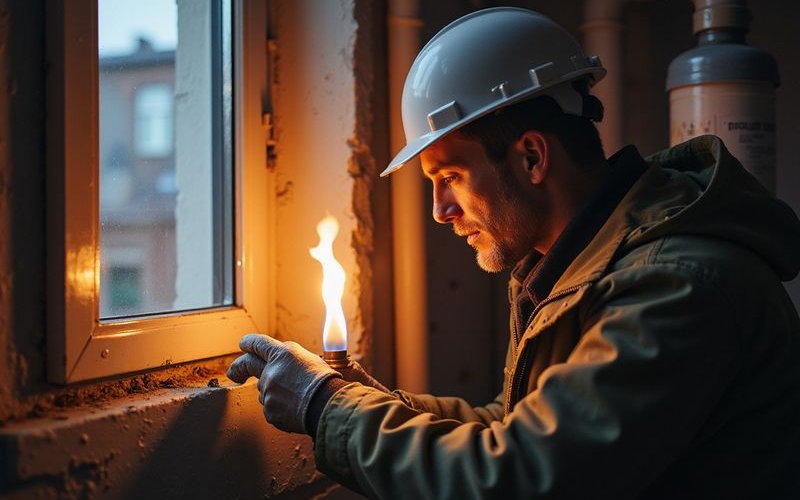
Hot Water System Perth Team
Local hot water experts serving Perth since 2021. Licensed plumbers specialising in heat pump and solar hot water systems.