Heat Pump vs Solar Hot Water in Perth: Which Is Right for Your Home?
A comprehensive comparison of heat pump and solar hot water systems for Perth conditions. Costs, efficiency, pros and cons explained.
Heat Pump vs Solar Hot Water in Perth: Which Is Right for Your Home?
You know the sinking feeling of a cold shower in July or the shock of opening an energy bill that’s higher than your car payment. We founded Hot Water System Perth in 2021 specifically to solve these recurring headaches, and we noticed that many Perth homeowners are stuck deciding between repairing an old gas guzzler or upgrading to modern efficiency.
The choice between heat pumps and solar hot water isn’t just about hot water; it’s about future-proofing your home against rising tariffs. From what we’ve seen in the field, the “best” option often comes down to your roof’s shape and your household’s daily schedule.
Let’s look at the hard numbers for 2026, compare the real-world performance of both systems in WA conditions, and help you decide which setup belongs on your property.
The Key Difference
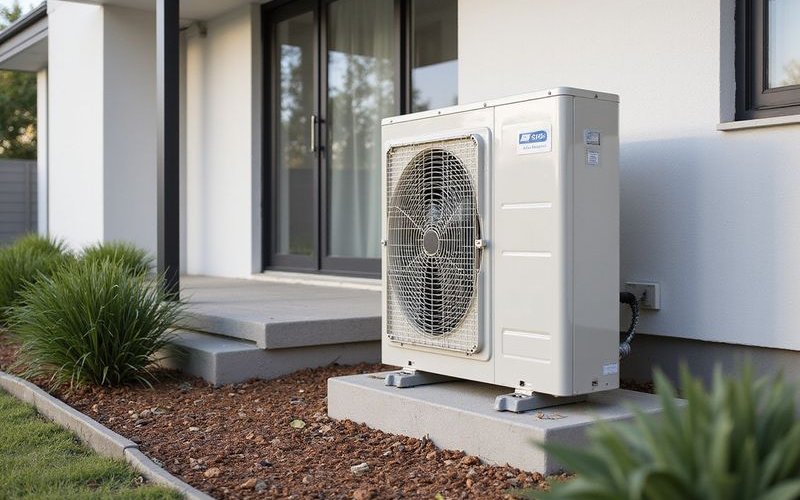
Heat pumps act like a reverse fridge. They extract heat from the surrounding air—even on cold Perth mornings—and transfer it into the water tank. This technology uses electricity but is incredibly efficient, with top-tier models (like the iStore or Reclaim) achieving a Coefficient of Performance (COP) of 4.0 or higher. This means for every 1kW of electricity you pay for, you get 4kW of heat energy.
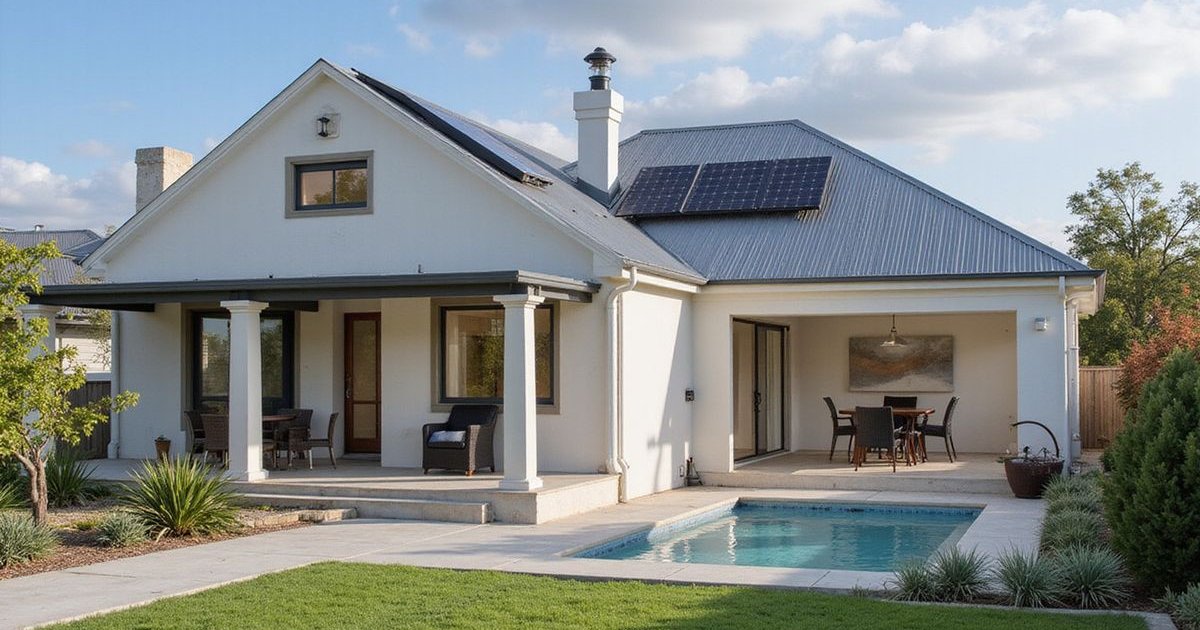
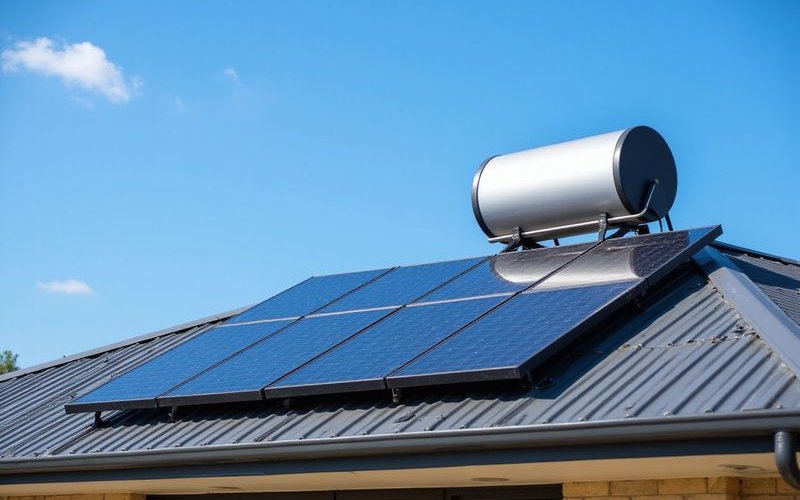
Solar hot water systems rely on roof-mounted collectors (either flat plates or evacuated tubes) to capture heat directly from the sun. They are simple and effective but require a booster (electric or gas) to ensure you have hot water during overcast weeks in June and July.
Both technologies are a massive upgrade from traditional electric storage units, often cutting energy use by 65% to 80%.
Head-to-Head Comparison
We have updated this comparison with typical 2026 market data for the Perth Metro area.
| Factor | Heat Pump | Solar Hot Water |
|---|---|---|
| Roof space required | None (Ground mounted) | Yes (2-4m² North-facing) |
| Works in all weather | Yes (Day & Night) | Needs booster (Winter/Cloudy) |
| Upfront cost (Installed) | Lower (~$3,500 - $5,500) | Higher (~$4,500 - $8,000) |
| Running costs | Very low (Esp. with solar PV) | Lowest (On sunny days) |
| Noise Level | ~45-50 dB (Like a quiet fan) | Silent |
| Lifespan | 10-15 years | 15-20 years |
| Government rebates | Yes (STCs - Zone 3) | Yes (STCs - Zone 3) |
| Best climate | Any | Sunny climates |
When to Choose a Heat Pump
Heat pumps have surged in popularity across WA suburbs like Joondalup and Baldivis. They are often the better choice when:
You Have Solar PV Panels
The “solar sponge” strategy is a game-changer here. If you set your heat pump to run between 10:00 AM and 2:00 PM, it runs off your own free solar electricity. Even without panels, using a timer with Synergy’s “Midday Saver” tariff (approx. 8 cents/kWh from 9am-3pm) creates the cheapest hot water available.
No Suitable Roof Space
Many modern homes have complex roof lines or heavy shading. If your roof faces east/west or is shaded by large gum trees, a heat pump avoids the efficiency drop that plagues rooftop solar collectors.
Rental Properties
We recommend heat pumps for landlords because they eliminate the “booster confusion” tenants often face. There are no switches to flip when the weather turns bad; the system just works.
Budget Constraints
With the STC rebate covering a significant portion of the hardware cost, heat pumps generally have a lower entry price. You can typically get a high-quality unit installed for $1,000 to $2,000 less than a full rooftop solar setup.
When to Choose Solar
Solar hot water is the traditional heavyweight in Western Australia for good reason. It makes sense when:
Perfect Roof Orientation
A north-facing roof with a 20-30° pitch allows collectors to operate at peak efficiency. In this scenario, a solar thermal system can provide 80-90% of your hot water for free during summer months without using any electricity at all.
Long-Term Ownership
These systems are built to last. With fewer moving parts than a heat pump compressor, a well-maintained solar thermal system can easily serve a home for 20 years.
Maximum Environmental Impact
If your goal is the absolute lowest carbon footprint, high-efficiency evacuated tube systems are hard to beat. They capture solar radiation passively, meaning on a sunny day, your water heating consumes zero energy from the grid.
You Don’t Want Noise
While modern heat pumps are quiet (roughly 45-50 decibels), they do make a low hum. WA’s Environmental Protection (Noise) Regulations limit residential noise to 45 dB(A) at the property boundary after 10 PM. A rooftop solar system is completely silent, which eliminates any risk of disturbing neighbors.
Perth-Specific Considerations
Local conditions play a huge role in system longevity.
Hard Water Zones
Perth water is notoriously hard, especially in the north-east metro corridor. This high mineral content attacks standard magnesium anodes, shortening tank life.
- Pro Tip: If you live in a hard water area, ask for an Aluminium (Blue) anode or an impressed current system. This simple swap prevents the anode from “over-reacting” and saves your tank from premature rust.
The “Zone 3” Rebate
Perth is classified as “Zone 3” for Small-scale Technology Certificates (STCs). This federal rebate acts like a point-of-sale discount.
- Important: The “Deeming Period” for these certificates drops every year on January 1st until the scheme ends in 2030. Waiting until next year to install could cost you hundreds of dollars in lost rebates.
Cost Analysis
Pricing can fluctuate based on installation complexity, but these are the typical ranges we see in 2026.
Upfront Costs (Installed, After STCs)
| System | Typical Cost Range |
|---|---|
| Heat Pump (Integrated) | $3,500 - $5,500 |
| Solar (Flat Plate) | $4,500 - $6,500 |
| Solar (Evacuated Tube) | $5,500 - $8,000 |
Annual Running Costs
| System | Typical Annual Cost |
|---|---|
| Heat Pump (Timed for Midday) | $80 - $150 |
| Solar (With Electric Booster) | $100 - $200 |
| Electric Storage (Comparison) | $900 - $1,300 |
Payback Period
Most households see a return on investment in 3 to 5 years. If you are replacing an inefficient electric storage unit, the savings on your Synergy bill alone can often cover the finance payments for a new system.
Maintenance Comparison
Every system needs care to reach that 15-year mark.
Heat Pump Maintenance
- Filter Cleaning: Clean the air intake filter every 3-6 months (easy DIY task).
- Clearance: Ensure plants don’t grow around the unit, blocking airflow.
- Professional Check: Service every 4-5 years to check refrigerant levels and valves.
Solar Maintenance
- Panel Cleaning: Dust and bird droppings reduce efficiency; rinse panels annually.
- Component Check: Pumps and controllers typically need replacement after 8-10 years.
- Glycol Flush: Closed-loop systems (used in frost areas) need fluid replacement every 5 years.
Making Your Decision
To simplify the choice, run through this quick checklist:
- Do you have solar panels? (Yes = Heat Pump is likely the winner)
- Is your roof north-facing and unshaded? (No = Heat Pump)
- Is your switchboard near a bedroom window? (Yes = Solar avoids noise issues)
- Are you on a tight budget? (Yes = Heat Pump)
- Do you plan to live there 20+ years? (Yes = Solar offers simpler long-term durability)
Our Recommendation Process
We don’t believe in “one size fits all” solutions. When you request an assessment, we evaluate:
- Your specific location: Determining if you are in a hard water suburb.
- Your electricity tariff: Checking if you can leverage the “Midday Saver” rates.
- Noise compliance: Measuring distances to neighboring boundaries to ensure legal compliance.
- Family usage: Sizing the tank so you never run out of hot water during the morning rush.
We utilize this data to recommend the system that genuinely suits your situation, even if that means suggesting a cheaper unit that fits your needs better.
Conclusion
Both heat pumps and solar hot water are excellent choices for Perth homes, offering substantial savings over traditional gas or electric systems. The “best” choice depends entirely on your roof, your budget, and your tolerance for maintenance.
Heat pumps offer incredible flexibility and smart-energy integration, while solar hot water provides silent, proven longevity for sunny properties. Whichever path you take, upgrading now locks in the current rebates before they decrease again next year.
Contact us for a free assessment to discuss which option suits your home.
Hot Water System Perth Team
Local hot water experts serving Perth since 2021. Licensed plumbers specialising in heat pump and solar hot water systems.